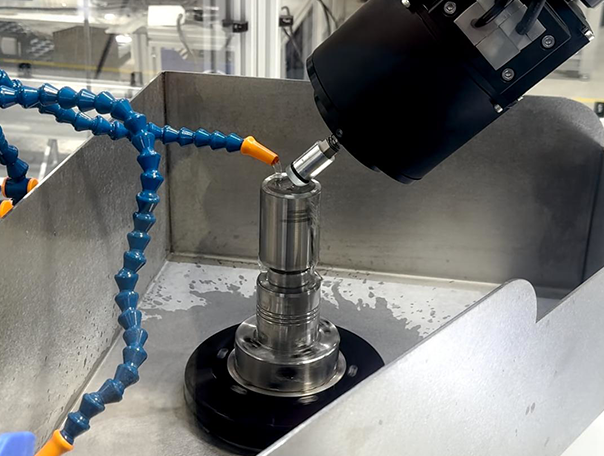

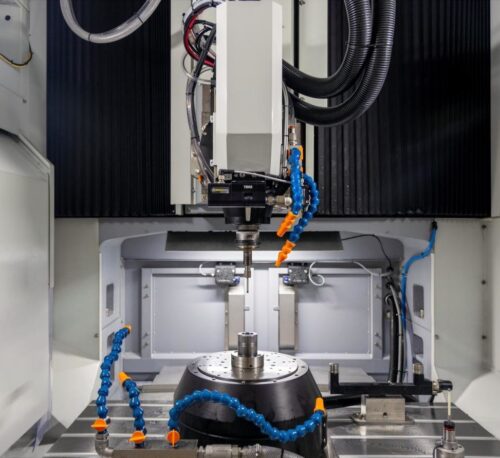
Interior view of the OptiSonic 1250X ultrasonic machining center – a 5-axis bridge-style machine equipped with pneumatic brakes on the B and C axes.
Pneumatic brakes on the rotary axes of OptiPro machines provide several important machining benefits, especially in CNC milling, drilling, and multi-axis applications where precision and rigidity matter.
The specific setup for OptiPro machines involve two rotary axes – a rotating spindle head (B axis, which rotates about the Y axis) and a rotating work chuck (C axis, which rotates about the Z axis). The pneumatic brake is used to prevent motion or reduce the amount of deflection on the B and C axes. The brake clamps on the output shaft of the rotary axis, making it a rigid design.
The advantage of the pneumatic B-Axis brake is to increase the stiffness of the tool holder in the direction of B-Axis rotation. The advantage of the pneumatic C-Axis brake is increased torque until slip. They are utilized in position and hold machining operations, meaning you rotate the B-Axis to a certain head angle and/or C-Axis to a specific orientation and apply the brake(s), then machine the part.
The machining benefits of having pneumatic brakes on the rotary axes include:
1. Increased Rigidity During Machining
When engaged, a pneumatic brake locks the rotary axis mechanically, preventing micro-movement caused by cutting forces. This is critical for:
- Heavy milling
- Off-center cutting
- Interrupted cuts
Result: Better surface finish and reduced tool chatter.
2. Improved Positional Accuracy
Even high-quality servo motors can experience slight deflection under load. A pneumatic brake:
- Holds the axis exactly at position
- Prevents drift during long dwell times
Result: Tighter tolerances and more consistent part geometry.
3. Reduced Wear on the Servo System
Without a brake, the servo motor must constantly fight cutting forces to hold position. A pneumatic brake:
- Offloads holding torque from the motor
- Reduces heat buildup in the servo
Result: Longer motor life and more stable axis performance.
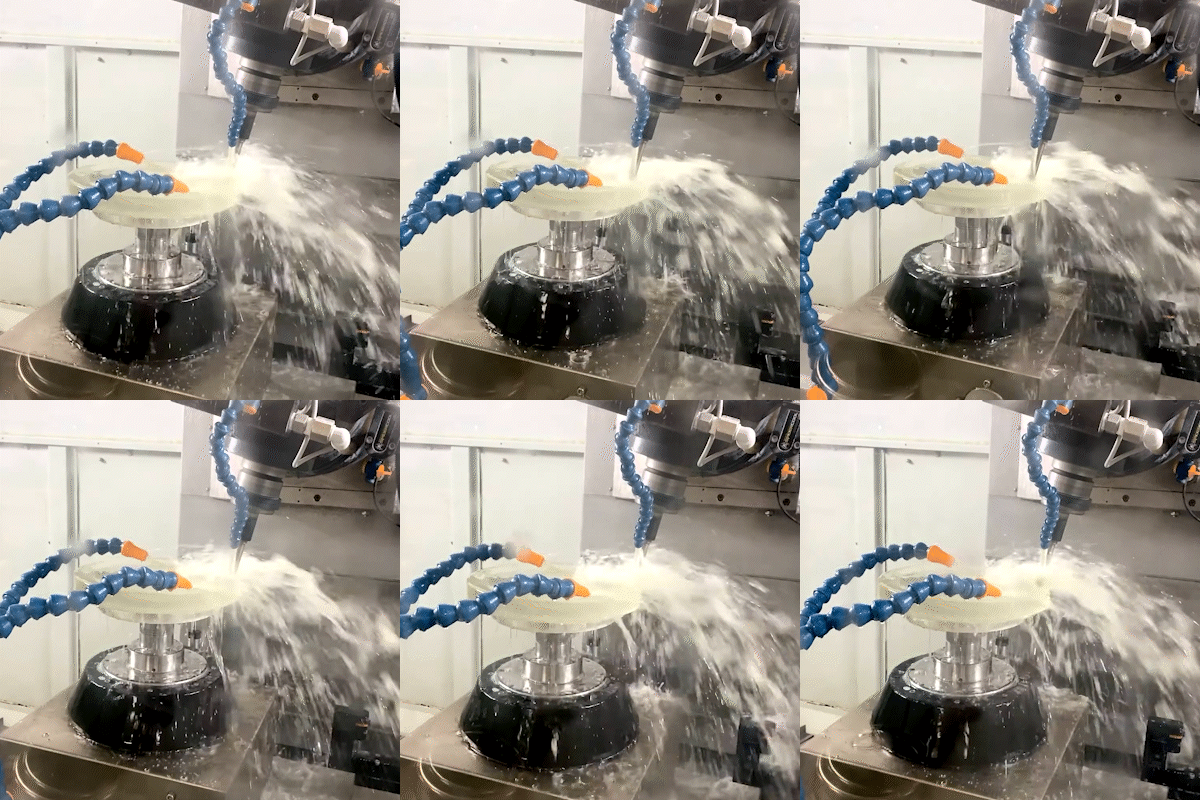
Light weighting and multi-axis machining on the OptiSonic 550X.
4. Faster Cycle Times in Certain Applications
By mechanically locking the axis:
- The control does not need to maintain constant torque
- Aggressive cutting parameters can be used confidently
Result: Higher material removal rates without sacrificing accuracy.
5. Improved Performance with Heavy Workpieces
Large or unbalanced parts exert significant torque on rotary axes. A pneumatic brake:
- Stabilizes the axis under gravity and cutting loads
Result: Consistent machining even with large fixtures or asymmetrical parts.
The C-axis pneumatic brake is a standard feature on all OptiPro machines besides PRO Series. The B-axis pneumatic brake is an option on e Series machines and standard on the larger 1100 Series and bridge machines. Contact us today for more information and find out how you can achieve more efficient and precise machining with OptiPro.